
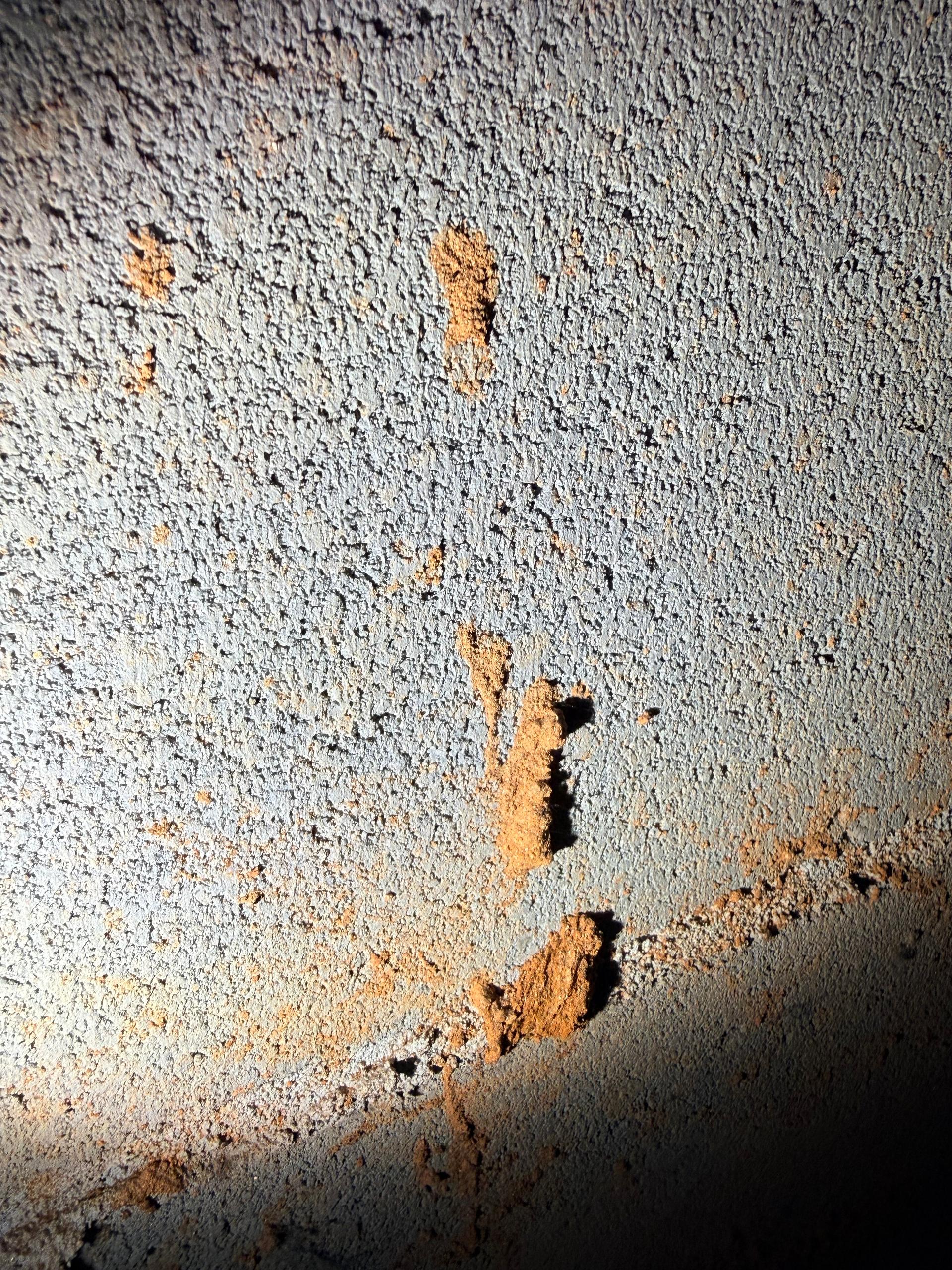
Mud Tubes on Foundation: What They Mean and How to Tell if They Are Active
A mud tube is a road termites built between the soil and the wood of your house. Alabama Professional Services can tell you whether anything is still traveling on it, at no charge.
Let's Take the First Step Toward a Healthy Home
A local specialist will inspect your home, walk you through the findings, and send a clear estimate. No cost, no pressure.
What Can Mud Tubes on Foundation Mean for Your Home?
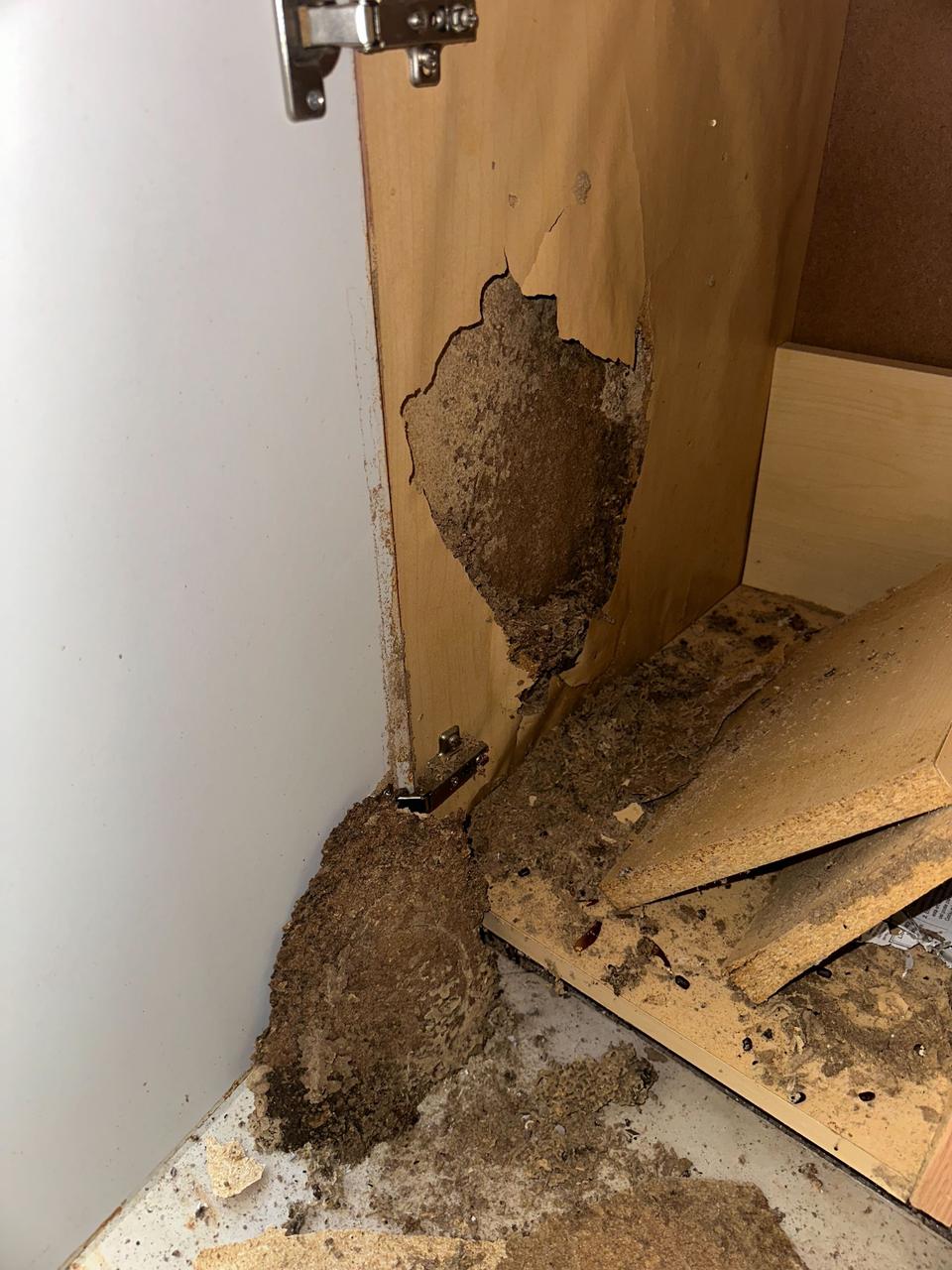
Mud tubes are narrow, earth colored tunnels, usually about the width of a pencil, running up a foundation wall, a crawl space pier, a slab edge or the back of a porch step. Subterranean termites build them from soil, saliva and waste because they live underground and dry out quickly in open air, so the tube is how they cross concrete, block or brick to reach the wood above it. Termites do not eat the foundation itself. The tube tells you they found a route from the soil to the timber, and because subterranean termites are present in Alabama year round, a route like that does not simply go away in winter. What a tube does not tell you on its own is whether the colony is still using it, how far damage has gone behind the wall, or which species built it. It is also evidence of one kind of termite only: drywood termites build no tubes at all, so a house without tubes is not automatically a house without termites.
What Often Turns Up Alongside Mud Tubes?
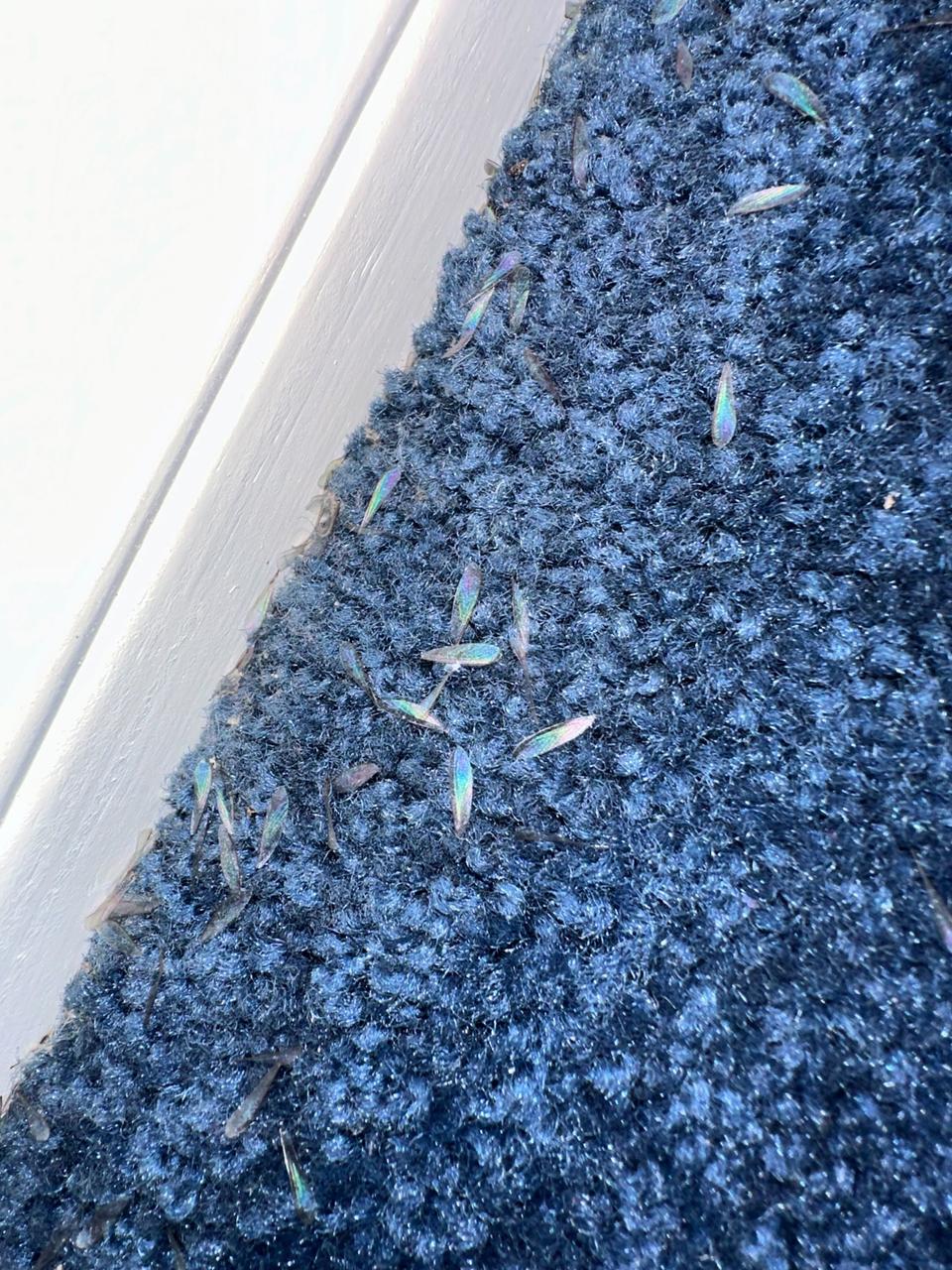
Discarded wings on a sill
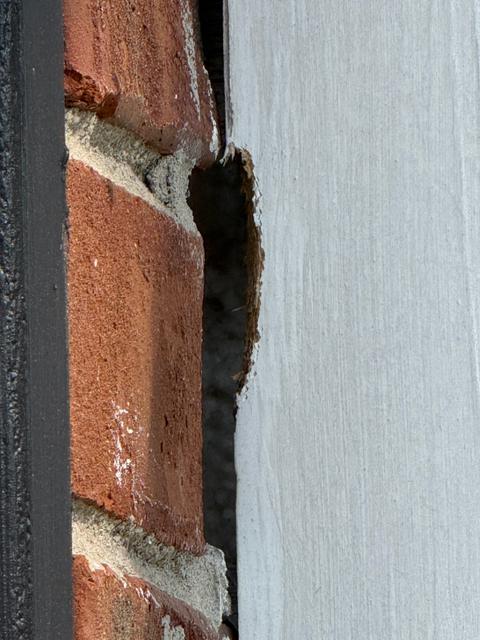
A small drift of identical wings near a window or an interior light, left behind after a swarm. Subterranean swarms run from early March on the coast to early April in north Alabama; Formosan termites swarm about a month later, at dusk near lights. Wings indoors usually mean a colony mature enough to swarm, and they often appear before anyone has noticed a tube outside.
Wood that sounds hollow
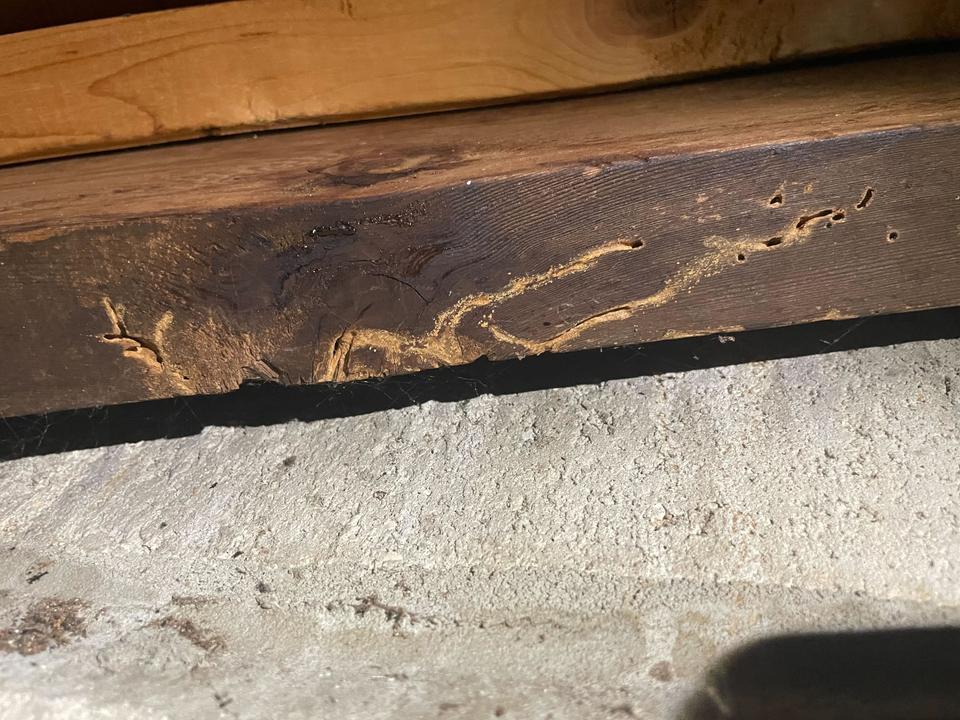
Termites eat along the grain and leave the surface layer intact, so a run of baseboard, a door frame or a joist near a tube can be substantially eaten while the paint on it still looks perfect. Tapping along it tells you more than looking at it.
Doors and windows that start to stick
Damage inside a frame can let it shift enough that a door or window that used to close easily starts to bind. On its own this has plenty of ordinary causes, Alabama humidity among them, so it matters most when it shows up near a tube or a patch of hollow wood.
Pellets collecting under timber
Small six sided pellets gathering underneath a piece of wood point to drywood termites, which live inside the timber, never touch the soil and build no tubes. Pellets with no tubes anywhere change what treatment would even be appropriate.
Tiny holes in the surface of wood
Pinhead sized openings, sometimes with pellets beneath them, are where drywood termites push waste out of their galleries. They are easy to miss and worth checking for on window trim, furniture and exposed beams.
What Causes Mud Tubes on Foundation?
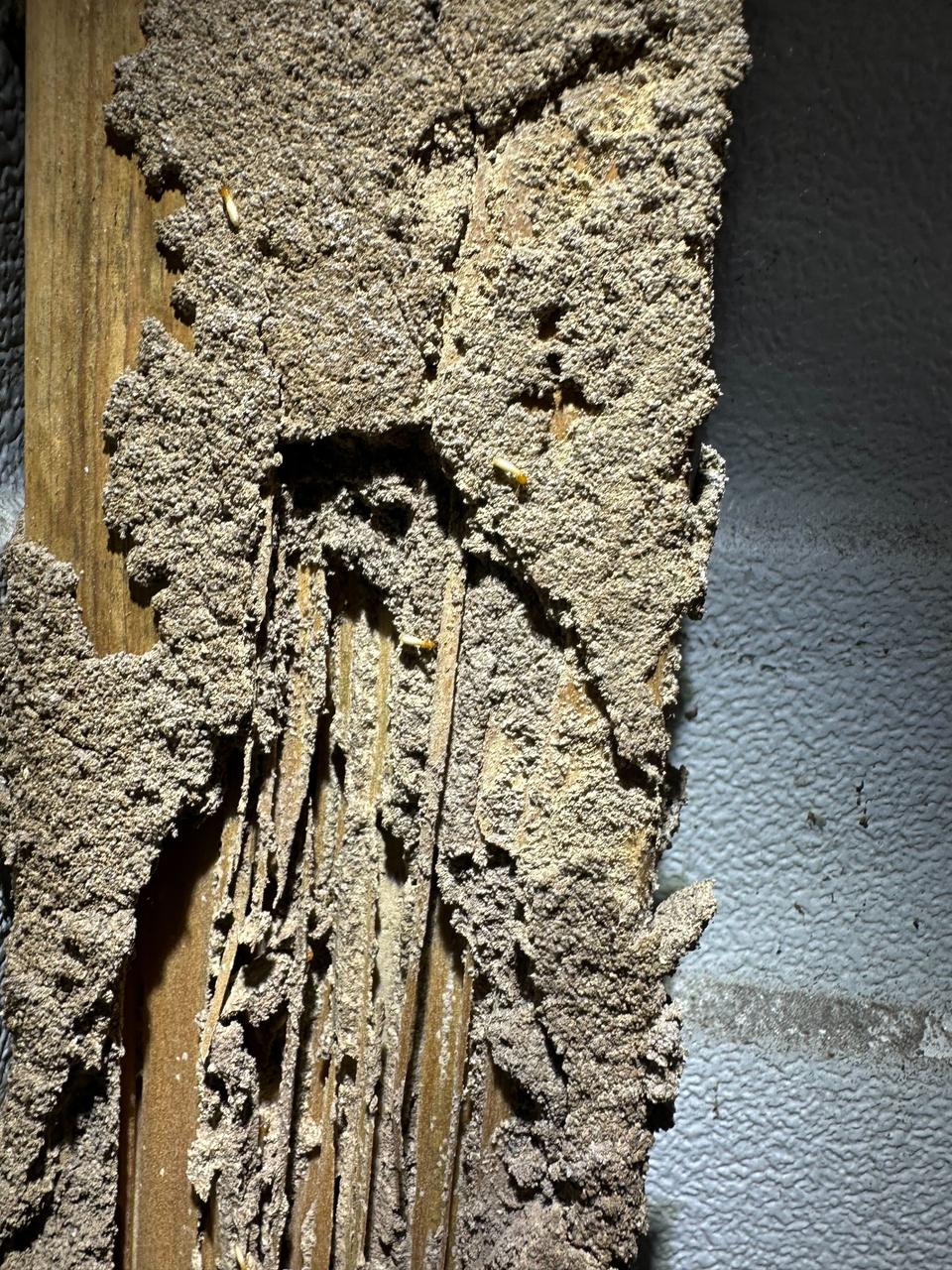
Mud Tubes on Foundation on Our Job Sites
Photos from our own inspections and job sites.
How Do Our Technicians Handle Mud Tubes on Foundation?
Each method is matched to what the inspection finds. The inspection shows which cause is at work in your home and which method fits it.
Liquid Soil Treatment
We apply Termidor SC to the soil around your foundation, a treatment termites pick up and carry back to the colony, with bond coverage available.
Termite Baiting Systems
We install Sentricon Always Active stations in the ground around your home, then monitor and service them on a set schedule.
Seeing a Different Sign?
Pick the symptom that best fits. We'll tell you what it can mean and where to go next.
What You Get From APS Termite Control
We use Sentricon Always Active baiting systems and Termidor SC liquid soil treatment, matched to the termite species and how your home is built.
Bond coverage is available, renewable each year and transferable when you sell your home.
We issue the Official Alabama Wood Infestation Report required for VA and FHA closings. Each report is valid for 30 days.
Answers to Common Questions About Mud Tubes on Foundation
Don't see your question here? Our team is happy to help. Reach out anytime.
Other Termite Signs to Watch For
One problem can leave more than one sign. If you see mud tubes on foundation, these are worth checking for too.
Serving All of Alabama
One office in Irondale. Technicians across the state.
- Huntsville, AL
- Montgomery, AL
- Hoover, AL
- Birmingham, AL
- Madison, AL
- Vestavia Hills, AL
- Alabaster, AL
- Tuscaloosa, AL
- Auburn, AL
Take the First Step Toward a Healthy Home
A straightforward path from the first inspection to lasting protection.
Schedule Your Inspection
A local specialist visits your home, inspects the problem, and answers your questions on site. No cost, no obligation.
Review Your Estimate
We explain our findings and provide an estimate for the recommended treatment.
Receive Your Treatment
Our team performs the recommended treatment and explains any follow up care or preventive measures.
Tell Us What You Found
From the Irondale office to any address in Alabama.
- A local specialist contacts you to schedule a visit.
- Your specialist inspects the problem and explains the findings.
- You receive an estimate with no obligation to proceed.
Expert Guidance on Protecting Your Home
Practical articles from the Alabama Professional Services team, written for Alabama homeowners.
 Termite Control
Termite Protection: Exploring the Benefits of Sentricon Systems
How the Sentricon Always Active bait system works around an Alabama home, and why it reaches the termite colony, from Alabama Professional Services.
- Termite Control
Does Mulch Attract Termites?
Mulch does not bring termites to your yard, but a deep bed against the foundation can help them reach the house.
-
 Termite Control
The Difference Between Pest Control and Termite Control
Knowing the differences between pest and termite control can help you find the best solution to your issue.
Noticed This Sign? Schedule Your Free Inspection
A technician inspects the property, walks you through what we find, and explains the treatment we recommend, with a clear estimate before any work starts.