
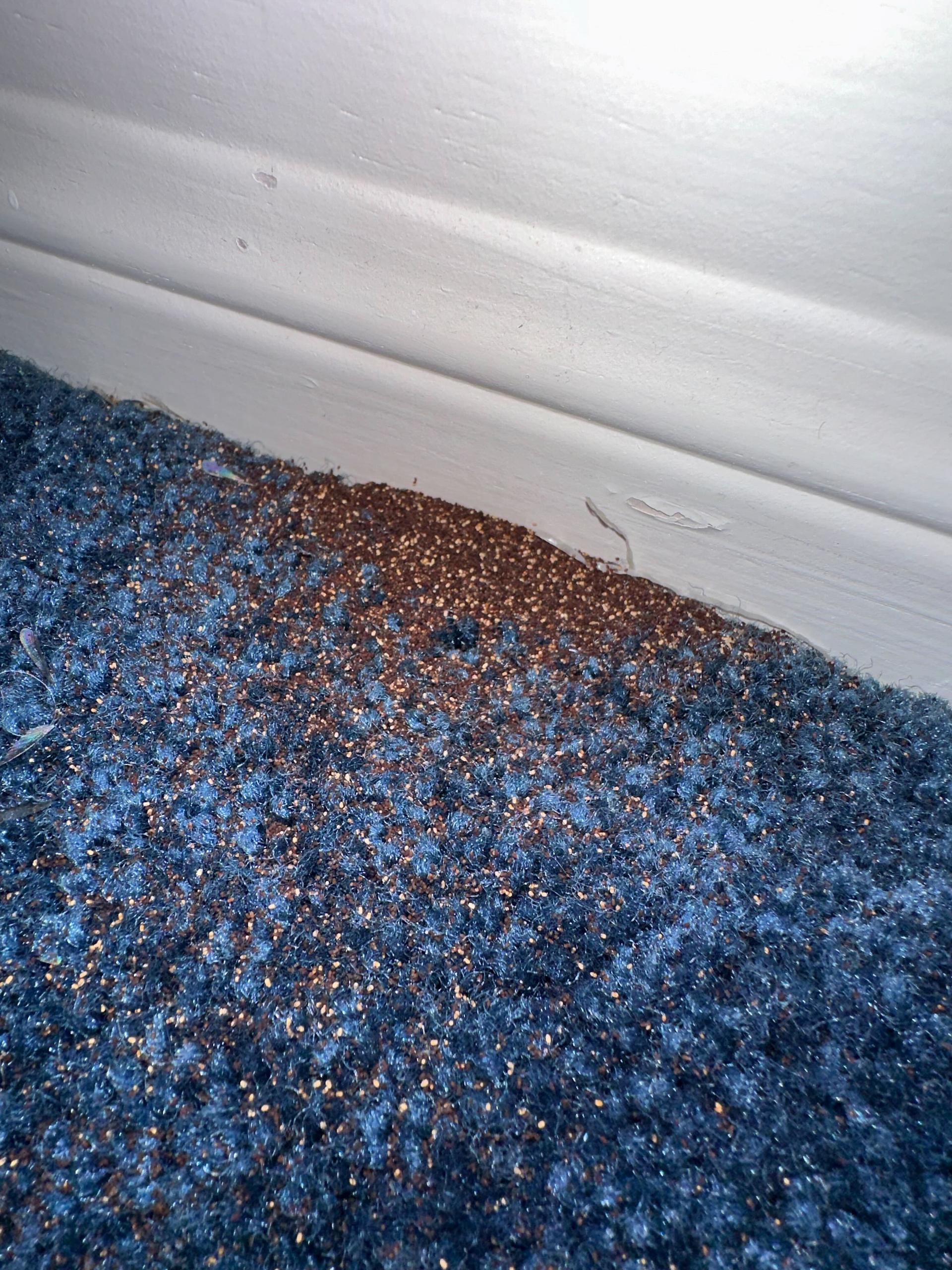
Piles of Wood Shavings: A Carpenter Ant Sign, and a Moisture Sign Too
Carpenter ants do not eat wood. They excavate it to nest in and push the shavings out. Alabama Professional Services finds the nest and the moisture that drew them there.
Let's Take the First Step Toward a Healthy Home
A local specialist will inspect your home, walk you through the findings, and send a clear estimate. No cost, no pressure.
What Can Piles of Wood Shavings Mean for Your Home?
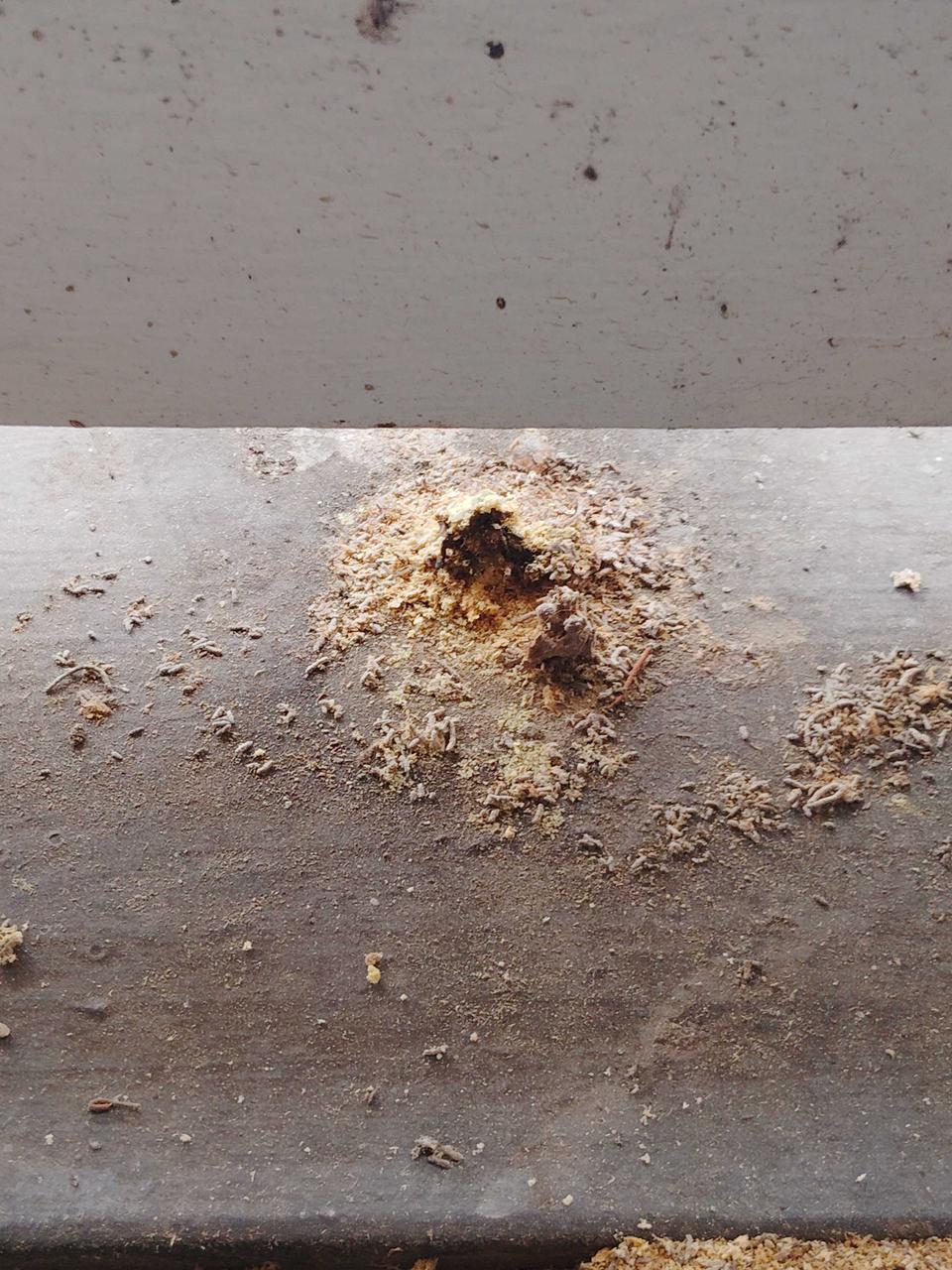
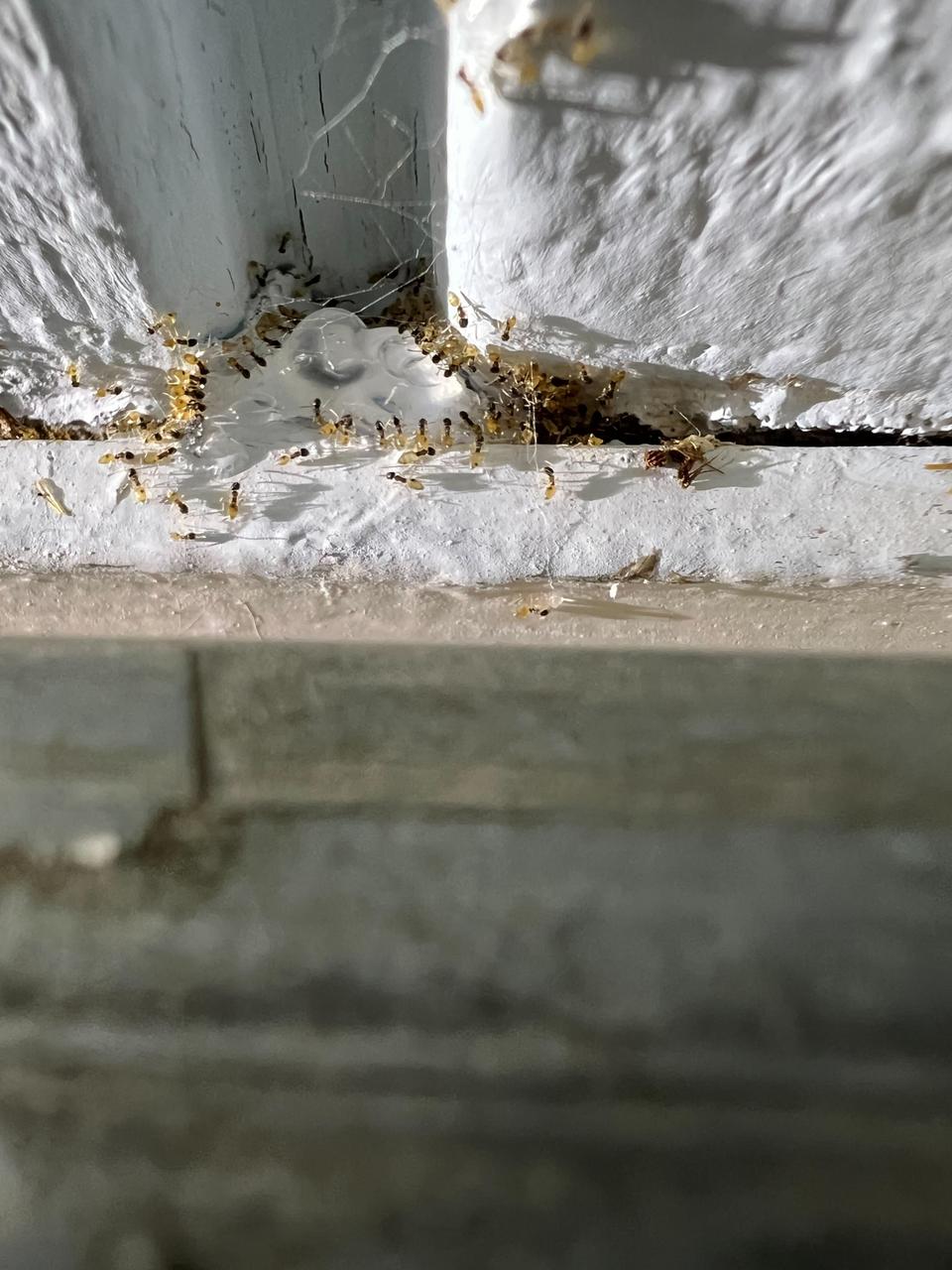
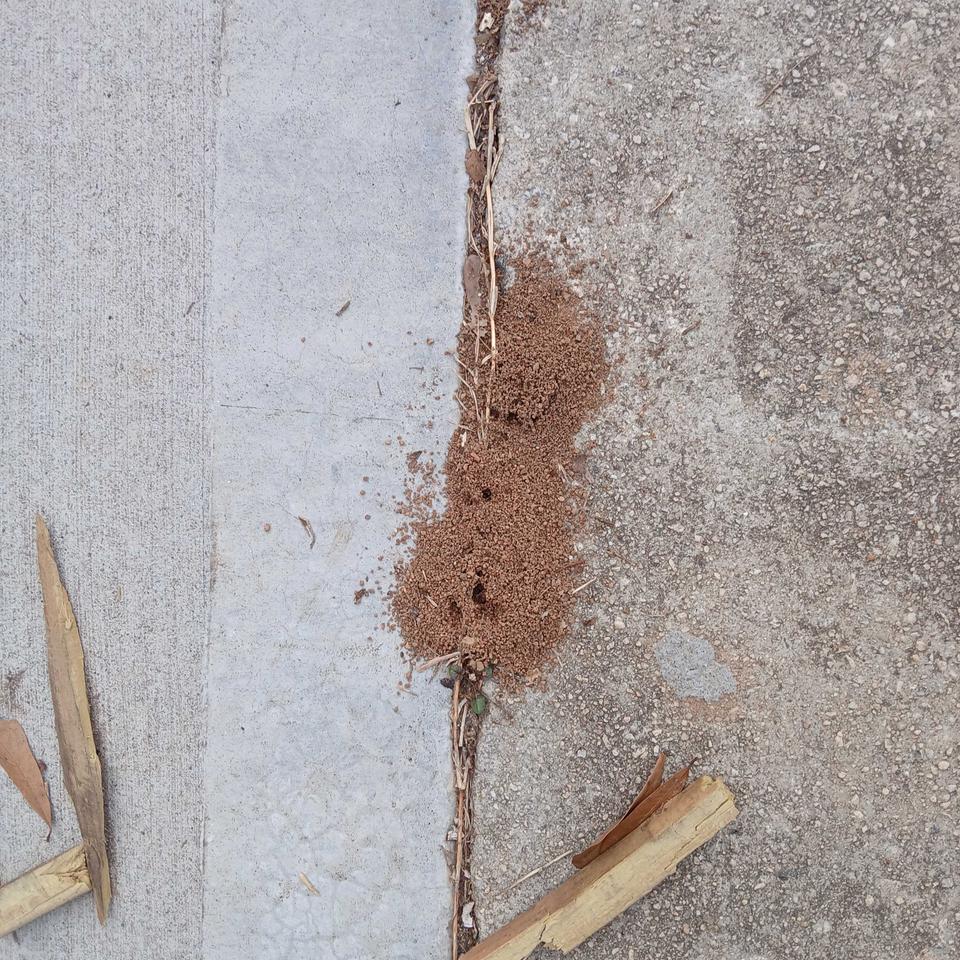
Small piles of coarse, sawdust like material collecting under a window frame, along a baseboard, beneath a porch column or on the floor of a crawl space are one of the clearest signs of carpenter ants. Carpenter ants do not eat wood the way termites do. They excavate it to build their nests, chewing out smooth galleries and carrying the debris outside through small openings, where it piles up. That debris, called frass, usually looks like fine wood shavings mixed with bits of insulation, soil and the body parts of dead ants. The pile tells you two things. It tells you a colony is actively working the wood above or behind it. And because carpenter ants almost always choose wood that moisture has already softened, it tells you there is a moisture problem somewhere to find: a roof or window leak, a plumbing drip, a failed seal, or a damp crawl space. Treating the ants without fixing the moisture can leave the same wood waiting for the next colony.
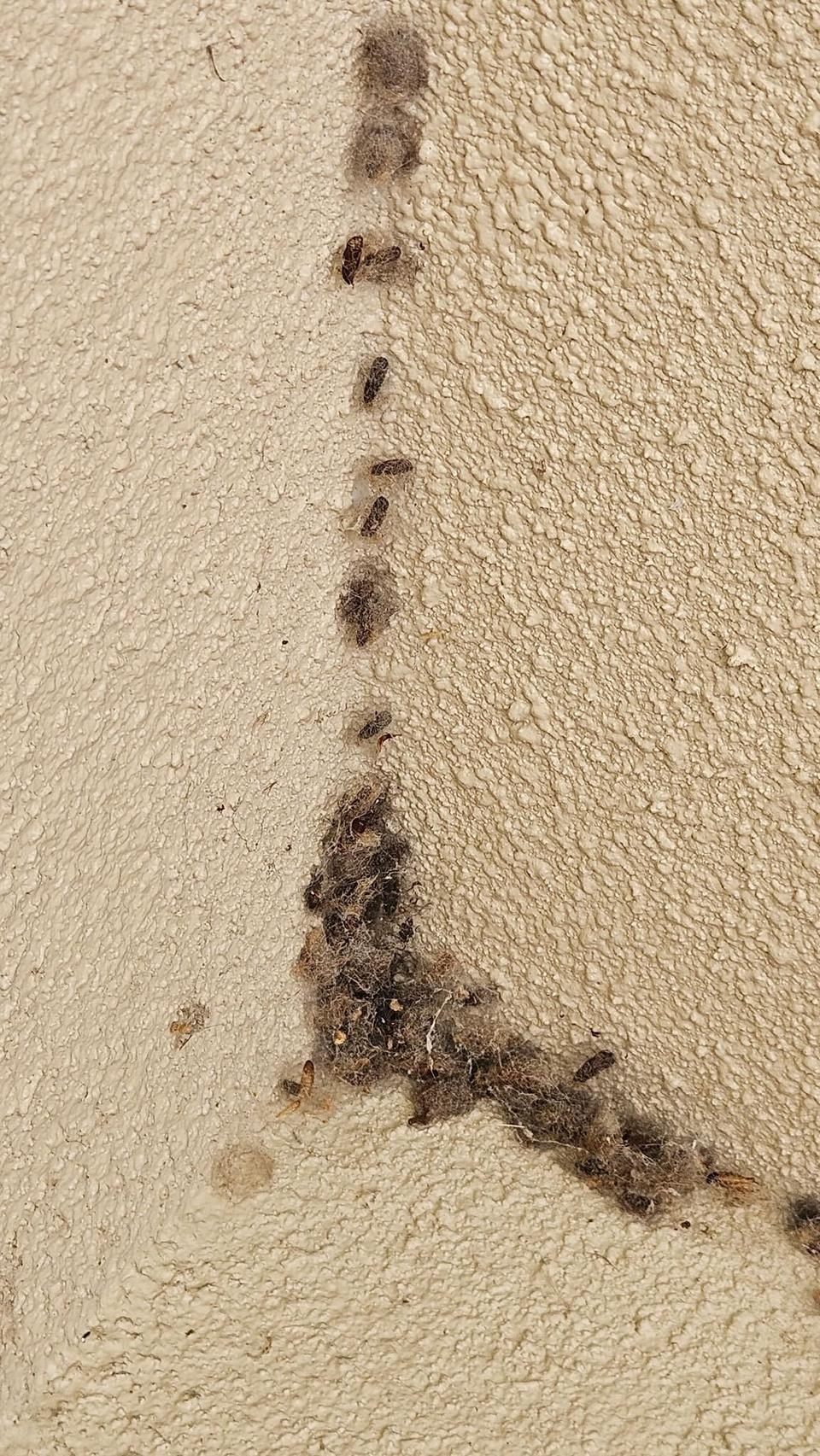
What Often Turns Up Alongside Wood Shavings?
Large black or black and red ants indoors
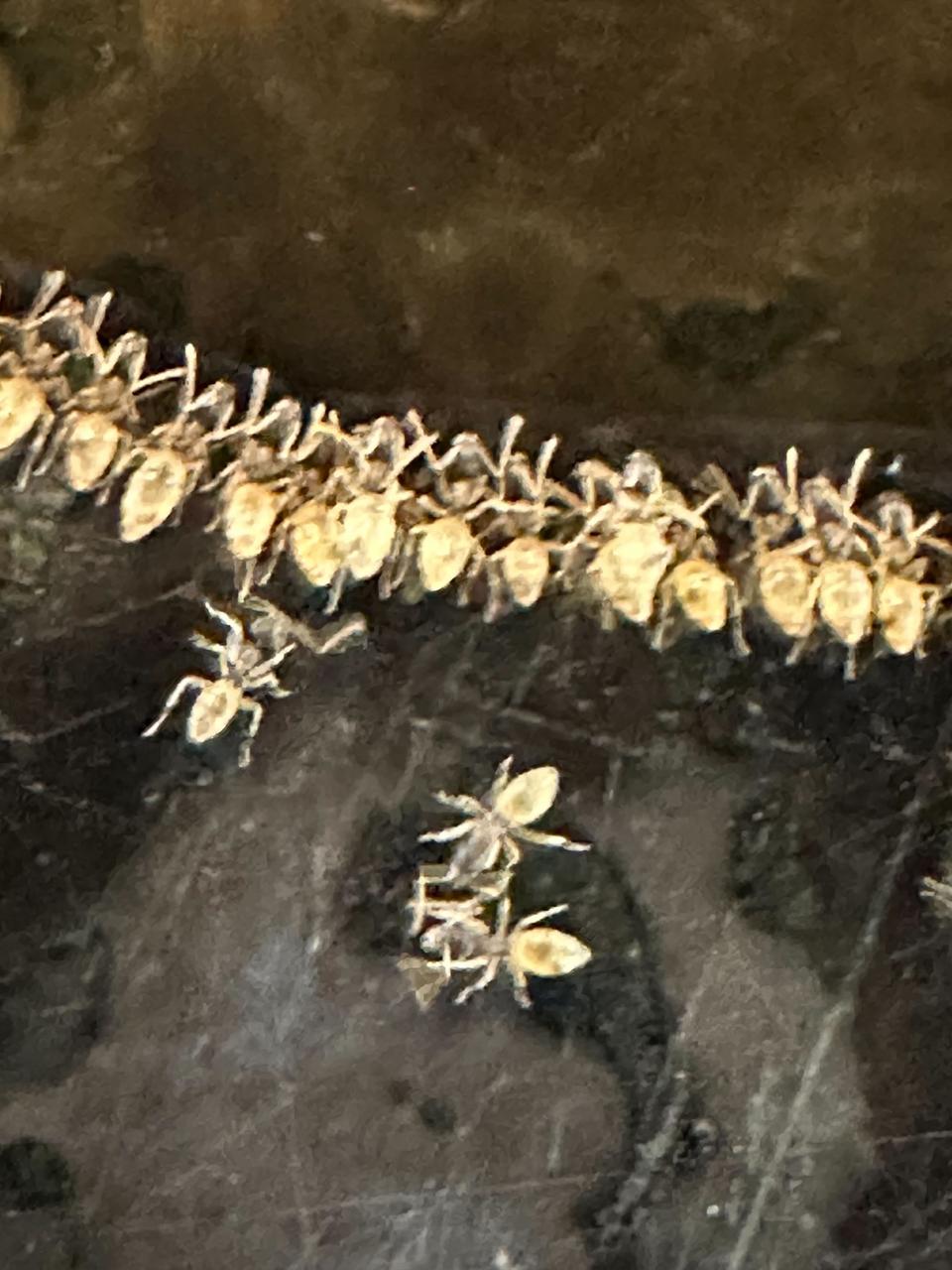
Carpenter ants are among the largest ants in Alabama homes, often black or a mix of black and red. Seeing them indoors in the evening or at night, when they forage, especially near damp areas, often points to a nest nearby.
Faint rustling inside a wall
A large, active colony can be heard in a quiet room as a faint rustling or crackling from inside a wall, a door frame or a ceiling. The rustling in the walls page covers what else can cause it.
Winged ants near a window
A mature carpenter ant colony sends out winged reproductives, usually in spring. Winged ants swarming inside the house usually mean the colony is nesting inside, not out in the yard.
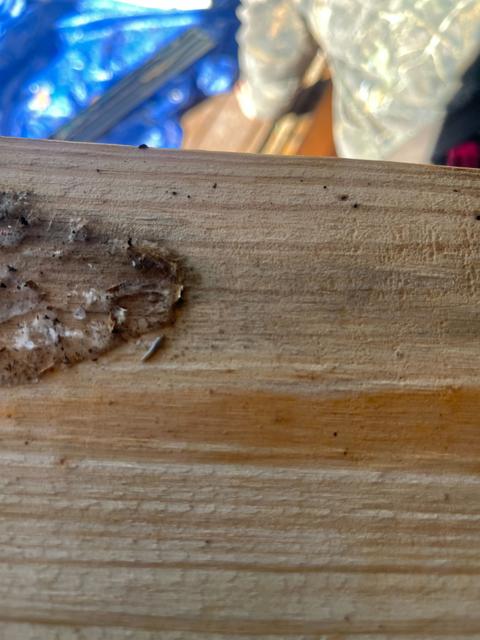
Wood with smooth, clean galleries
Carpenter ant galleries are smooth and clean, as though sanded, because the ants keep them clear. Termite galleries are often rough and packed with soil and waste. Where wood has been opened up, that difference is one of the quickest ways to tell the two apart.
Stains, peeling paint or soft wood
Water stains, peeling paint, soft trim and swollen window frames show where moisture has got into the wood. They are where carpenter ants most often nest, and they are worth pointing out to the technician.
What Causes Piles of Wood Shavings?
How Do Our Technicians Handle Piles of Wood Shavings?
Each method is matched to what the inspection finds. The inspection shows which cause is at work in your home and which method fits it.
Void Injection Therapy
When carpenter ants nest inside a wall, door frame or ceiling, we inject insecticidal dust or foam through a few small drill holes to reach the nest.
Ant Exclusion & Sealing
We treat the colony and seal the gaps ants use around utility lines, doors, windows and the foundation, so the way in is closed too.
Seeing a Different Sign?
Pick the symptom that best fits. We'll tell you what it can mean and where to go next.
What You Get From APS Ant Control
Fire ants, carpenter ants and small indoor ants each need a different treatment, so every plan starts by identifying the species.
For pharaoh ants, ghost ants and other species that form new colonies when disturbed, we use non repellent baits instead of sprays.
If a covered pest problem returns between scheduled quarterly treatments, we'll come back at no additional charge.
You get a clear estimate before any work starts, with no obligation to go ahead.
Answers to Common Questions About Piles of Wood Shavings
Don't see your question here? Our team is happy to help. Reach out anytime.
Other Ant Signs to Watch For
One problem can leave more than one sign. If you see piles of wood shavings, these are worth checking for too.
Serving All of Alabama
One office in Irondale. Technicians across the state.
- Huntsville, AL
- Montgomery, AL
- Hoover, AL
- Birmingham, AL
- Madison, AL
- Vestavia Hills, AL
- Alabaster, AL
- Tuscaloosa, AL
- Auburn, AL
Take the First Step Toward a Healthy Home
A straightforward path from the first inspection to lasting protection.
Schedule Your Inspection
A local specialist visits your home, inspects the problem, and answers your questions on site. No cost, no obligation.
Review Your Estimate
We explain our findings and provide an estimate for the recommended treatment.
Receive Your Treatment
Our team performs the recommended treatment and explains any follow up care or preventive measures.
Tell Us What You Found
From the Irondale office to any address in Alabama.
- A local specialist contacts you to schedule a visit.
- Your specialist inspects the problem and explains the findings.
- You receive an estimate with no obligation to proceed.
Expert Guidance on Protecting Your Home
Practical articles from the Alabama Professional Services team, written for Alabama homeowners.
 Ant Control
Top Four Causes of Ant Infestation
Discover the top four causes of ant infestation and how they can disrupt your home.
Noticed This Sign? Schedule Your Free Inspection
A technician inspects the property, walks you through what we find, and explains the treatment we recommend, with a clear estimate before any work starts.