

When Is This Not the Right Fix?
Treating carpenter ants without fixing the moisture that drew them in leaves the conditions for the next colony. And a nest deep in a finished wall may not be pinpointed on the first visit.
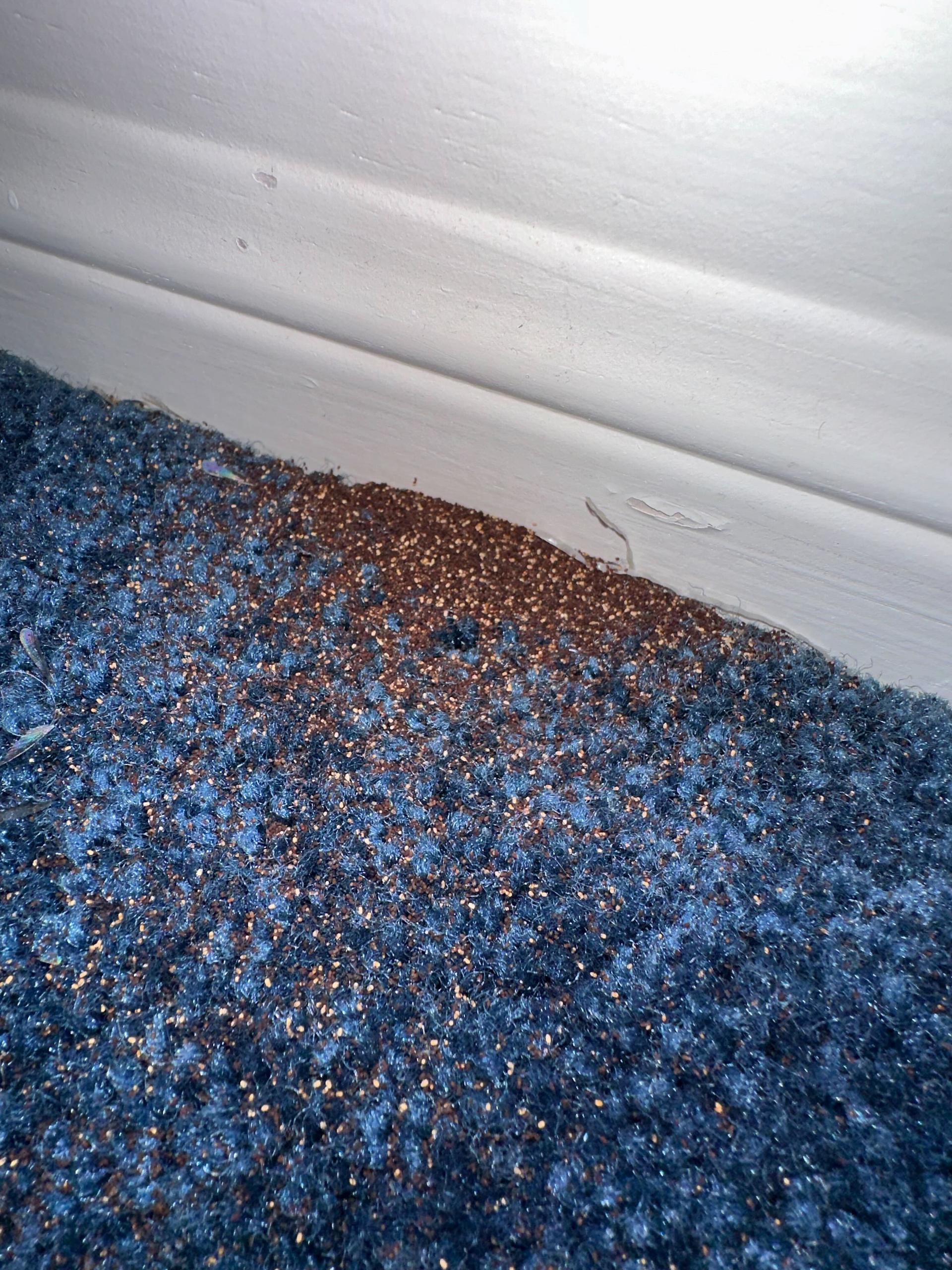
Carpenter ants do not eat wood, they tunnel through it to nest, and they usually mean moisture somewhere. Alabama Professional Services finds the nest and the reason it is there.
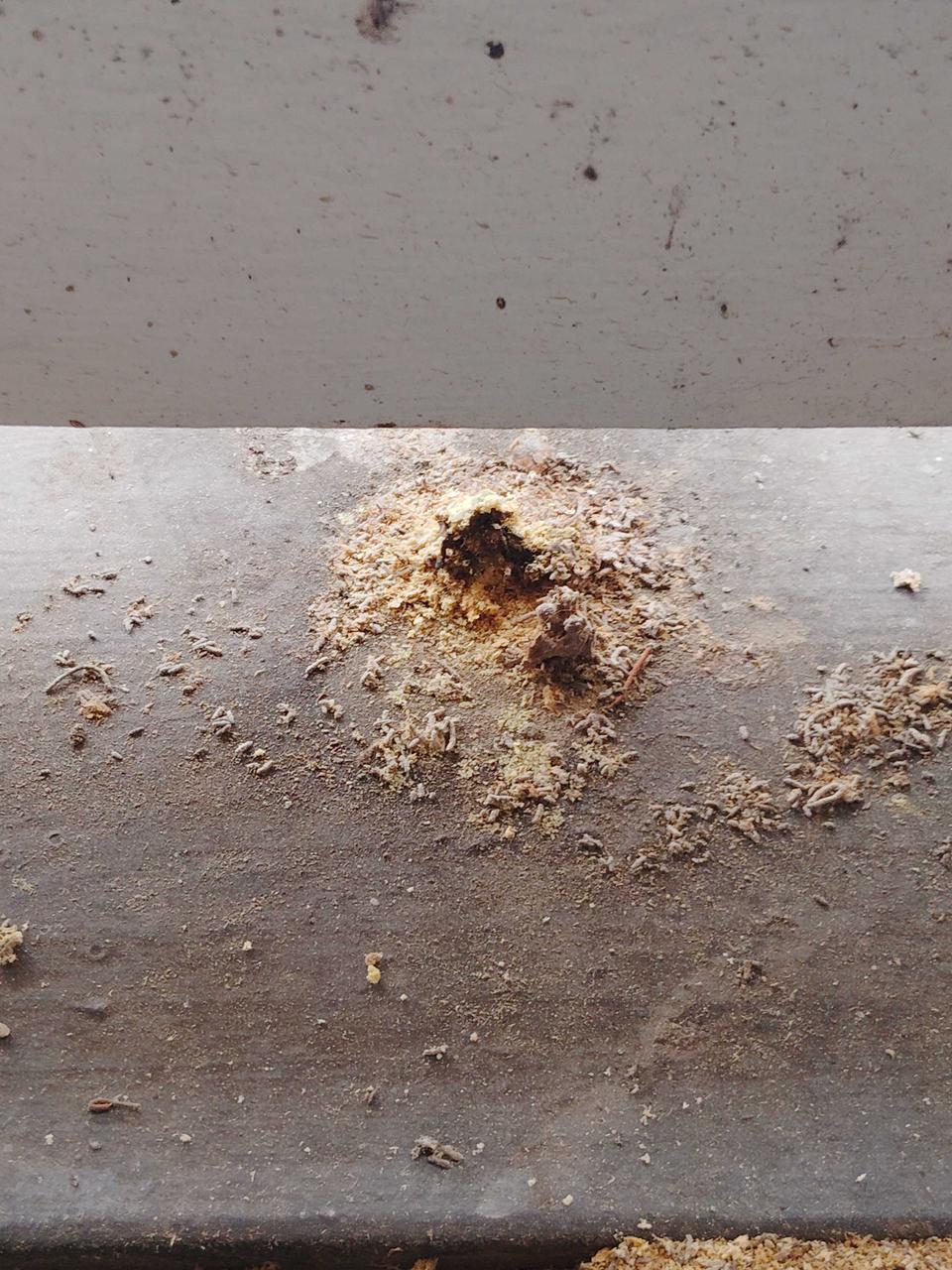
Carpenter ants are the large ants, usually black or dark red, that people find wandering indoors in spring or leaving small piles of sawdust under a window. They are one of the few ants that damage a house, and unlike termites they do not eat the wood. They excavate it to build nests.
A local specialist will inspect your home, walk you through the findings, and send a clear estimate. No cost, no pressure.
How the Price Is Set
The inspection is free. Treatment is quoted after it, because where the nest is and how many there are set the scope.
In Depth
Carpenter ants are the large ants, usually black or dark red, that people find wandering indoors in spring or leaving small piles of sawdust under a window. They are one of the few ants that damage a house, and unlike termites they do not eat the wood. They excavate it to build nests.
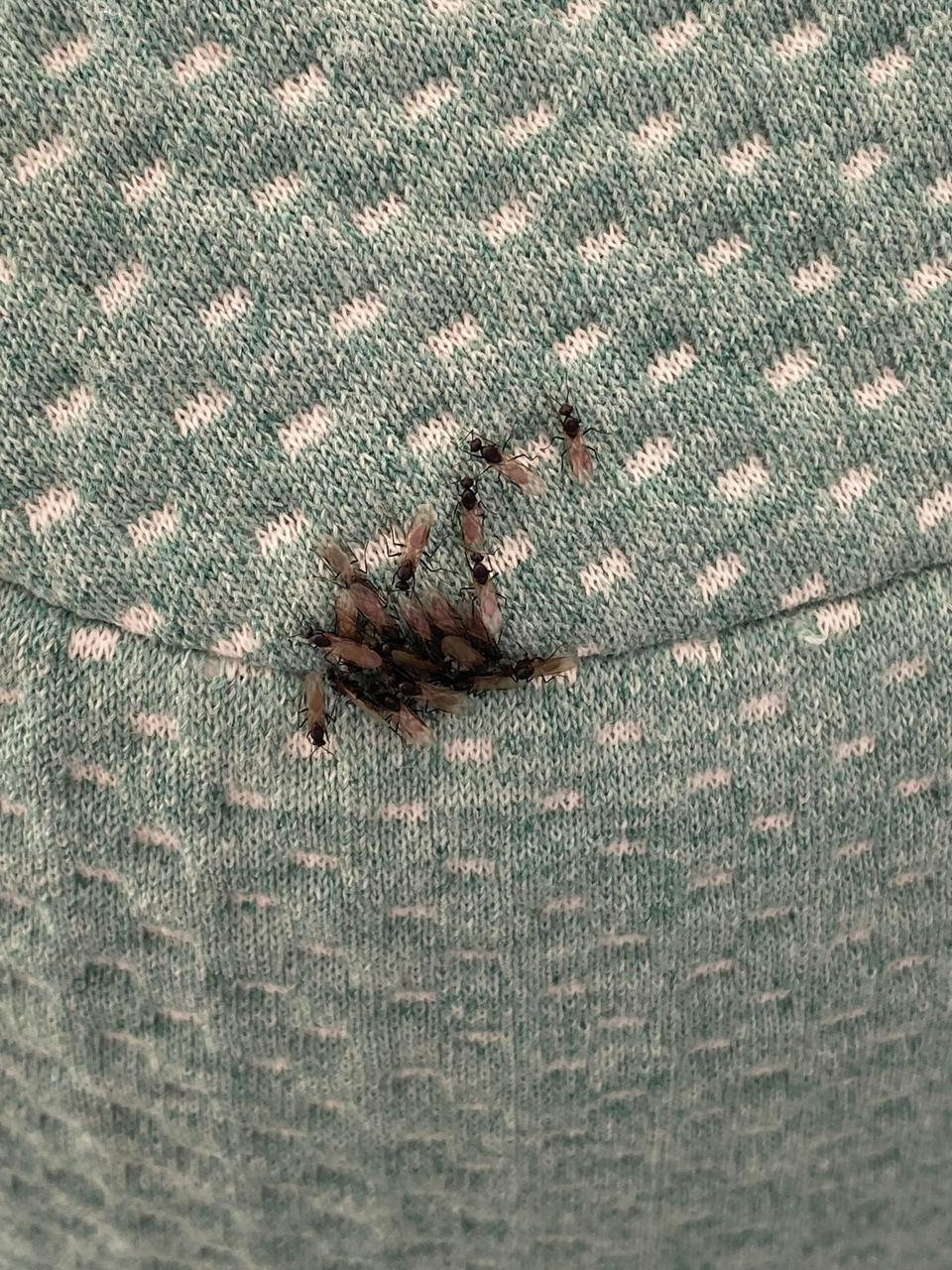
Both can swarm in spring and both can damage wood, which is why they get confused. Carpenter ants have a pinched waist, elbowed antennae and front wings longer than the back ones; termites have a thick body with no waist, straight antennae and wings of equal length. The debris is different too: carpenter ants leave soft, sawdust like shavings, while drywood termites leave hard, six sided pellets. Our termites vs ants guide covers the comparison in full.
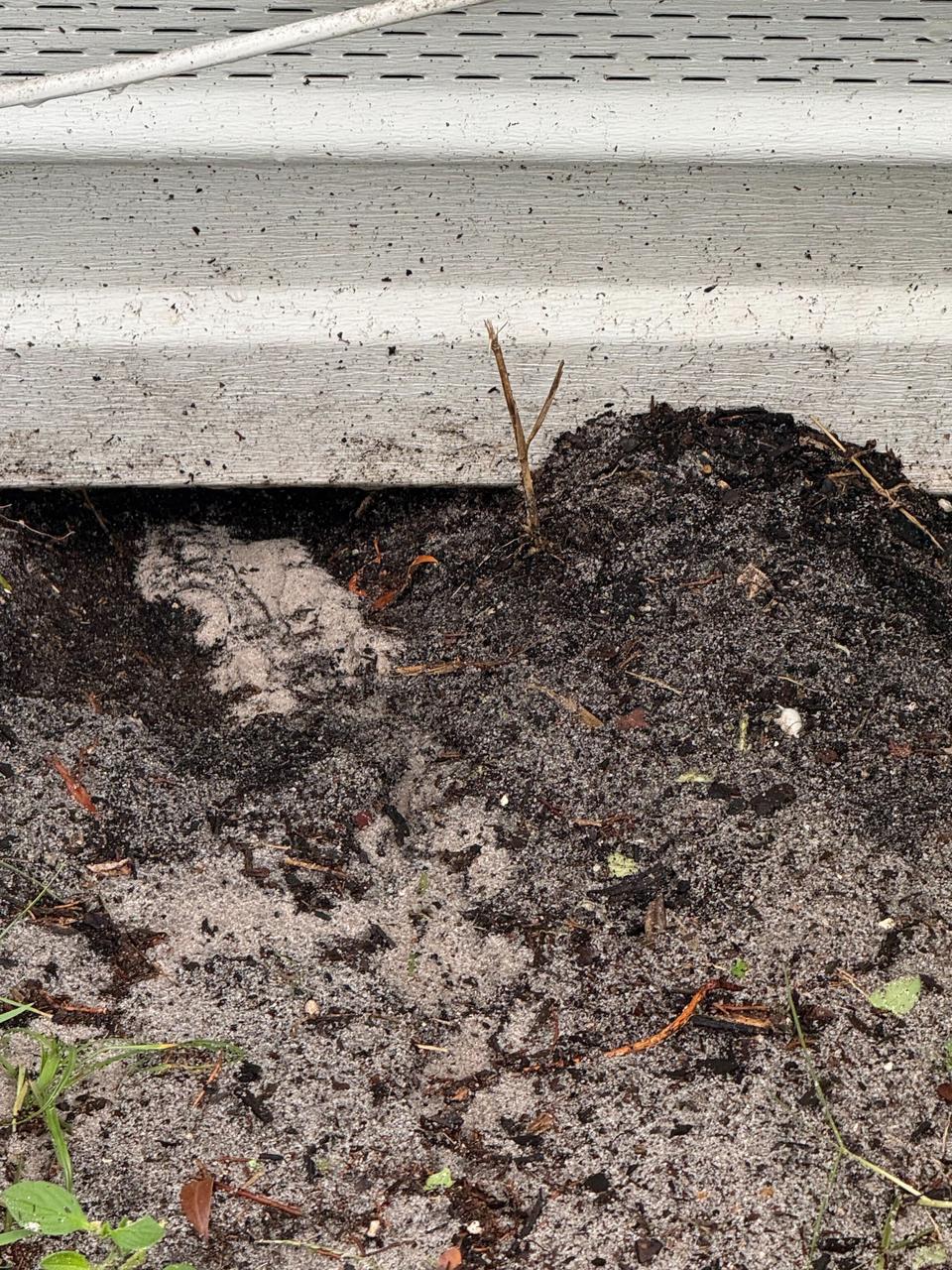
Carpenter ants prefer wood that is already damp or softened, because it is easier to excavate. A nest inside a house usually sits near a moisture source: a leaking window or roof, a plumbing leak inside a wall, a damp crawl space or wood that stays wet where it meets the ground. That is why a carpenter ant problem is really two problems, the colony and whatever drew it there, and treating the ants without dealing with the moisture invites the next colony in. Every ant treatment method we use is explained separately.
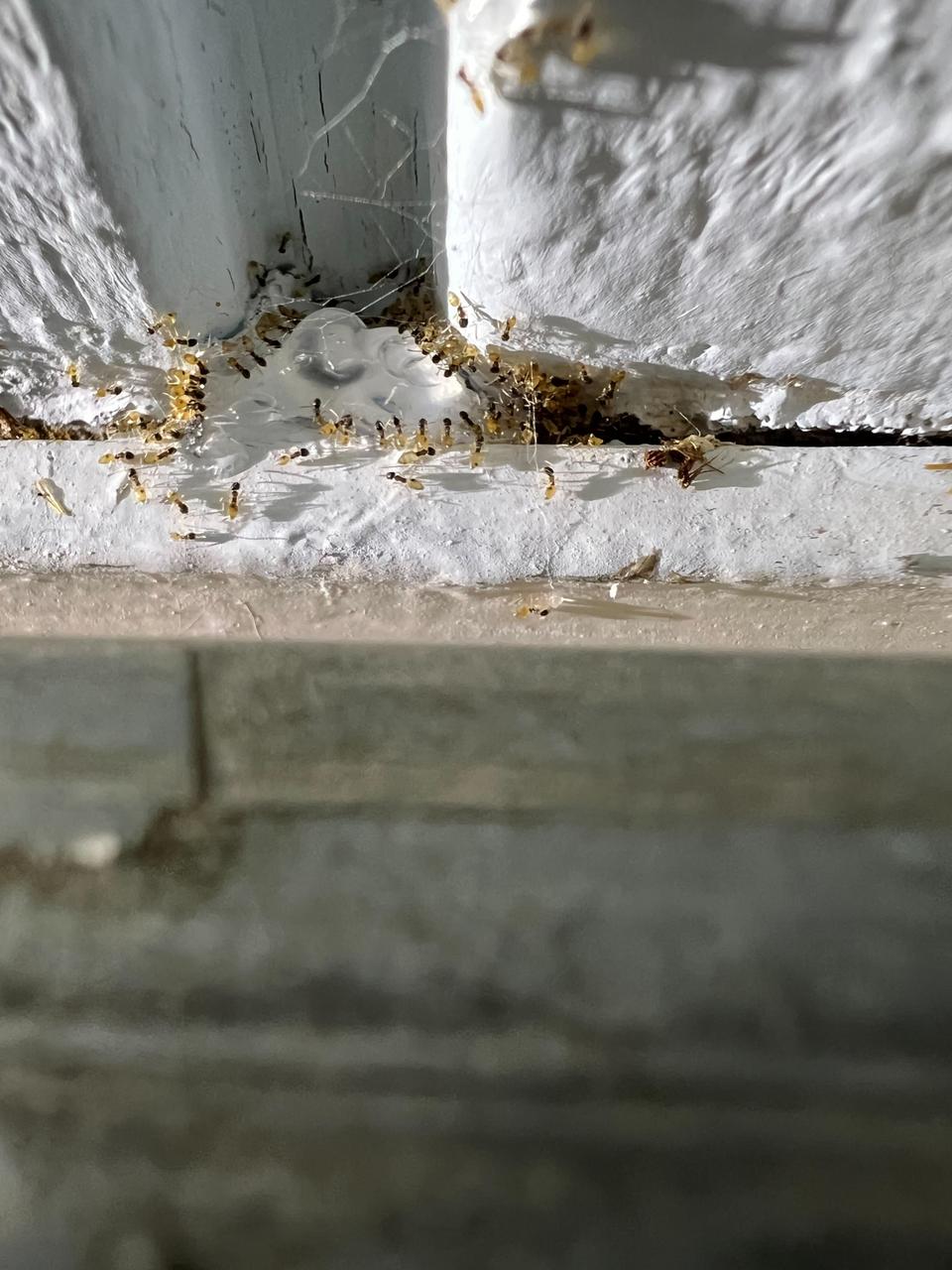
Small piles of wood shavings, sometimes mixed with insect parts, collecting under trim, windows or baseboards. Large ants trailing indoors, often at night. Winged ants indoors in spring, which means a mature colony is nearby. Faint rustling inside a wall where a nest is active. Older homes are more exposed; in Birmingham's inner suburbs, pre war housing is where carpenter ant work turns up most.
The technician follows the trails back toward the nest, which may be inside a wall, a door frame or a damp section of framing, and sometimes has a satellite nest outdoors in a stump or woodpile. Where the colony is inside a wall void, the treatment can be applied directly into the void: void injection puts an insecticidal dust or foam through small drill holes, which is non disruptive and reaches the nest itself. Moisture sources are pointed out so they can be fixed.
It can. Carpenter ants are one of the four wood destroying insects the Official Alabama Wood Infestation Report covers, alongside termites, carpenter bees and powderpost beetles, so activity or damage found during an inspection for a VA or FHA purchase is recorded.
Most carpenter ant damage is limited to the wood they nested in. Where moisture and excavation have affected the structure itself, our sister company APS Foundation Repair is set up to assess that side of it. Schedule your free inspection if you have found shavings, large ants indoors or anything else that has you wondering.
After inspecting your property, we recommend treatment methods based on the pests present and the conditions we find.
When carpenter ants nest inside a wall, door frame or ceiling, we inject insecticidal dust or foam through a few small drill holes to reach the nest.
We treat the colony and seal the gaps ants use around utility lines, doors, windows and the foundation, so the way in is closed too.
Carpenter, fire and Argentine ants all emerge in spring. Fire ants respond best between March and November, while the soil sits between 60 and 95 degrees, using a mound drench for fast results and a broadcast bait that reaches the satellite colonies. Pharaoh ants, ghost ants and other budding species are never sprayed, because a sprayed colony splits and multiplies; they get non repellent baits only.
Each card below is a sign our technicians look for during a free inspection. Open one to read what it can mean and what we do about it.
Our specialists evaluate the underlying cause before recommending any work. Inspections are at no cost and there's no obligation to proceed.
Fire ants, carpenter ants and small indoor ants each need a different treatment, so every plan starts by identifying the species.
For pharaoh ants, ghost ants and other species that form new colonies when disturbed, we use non repellent baits instead of sprays.
If a covered pest problem returns between scheduled quarterly treatments, we'll come back at no additional charge.
You get a clear estimate before any work starts, with no obligation to go ahead.
Pick the symptom that best fits. We'll tell you what it can mean and where to go next.
Don't see your question here? Our team is happy to help. Reach out anytime.
Treating carpenter ants without fixing the moisture that drew them in leaves the conditions for the next colony. And a nest deep in a finished wall may not be pinpointed on the first visit.
How to recognize each one and what it means for your home.
Crazy ants are recognized by their movement before anything else: fast, jerky and without the neat lines most ants follow.
Learn moreArgentine ant control targets the colony that the trail comes from. Their nests are connected, they have many queens, and a spray on the trail barely touches them.
Learn moreGhost ants are a budding species, which changes everything about how they are treated. Spraying splits one colony into several.
Learn moreWhite footed ants are a numbers problem. Their colonies are very large and spread across many nests, so control targets the colony behind the ants on the counter.
Learn moreSugar ants are odorous house ants. They trail to sweets, smell of rotten coconut when crushed and move indoors after rain.
Learn morePharaoh ants are the clearest case of spraying making things worse. They are a budding species: disturb a colony and it splits.
Learn moreOne office in Irondale. Technicians across the state.
A straightforward path from the first inspection to lasting protection.
The ants or their debris are identified, to confirm whether the source is carpenter ants, termites or another ant.
Trails are followed toward the nest, indoors and out, including stumps, woodpiles and damp framing.
Leaks, damp crawl spaces and wet wood near the nest are found, because they are why the colony is there.
The nest is treated directly, including void injection into wall voids through small drill holes where the colony is inside a wall.
Outdoor satellite nests are checked and treated so the colony does not simply move back in.
Quarterly pest control keeps the house under recurring service.
From the Irondale office to any address in Alabama.
Practical articles from the Alabama Professional Services team, written for Alabama homeowners.
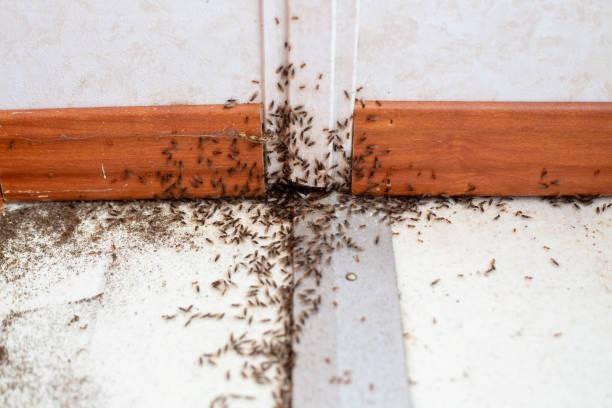 Ant Control
Discover the top four causes of ant infestation and how they can disrupt your home.
A technician inspects the property, walks you through what we find, and explains the treatment we recommend, with a clear estimate before any work starts. The inspection is free.