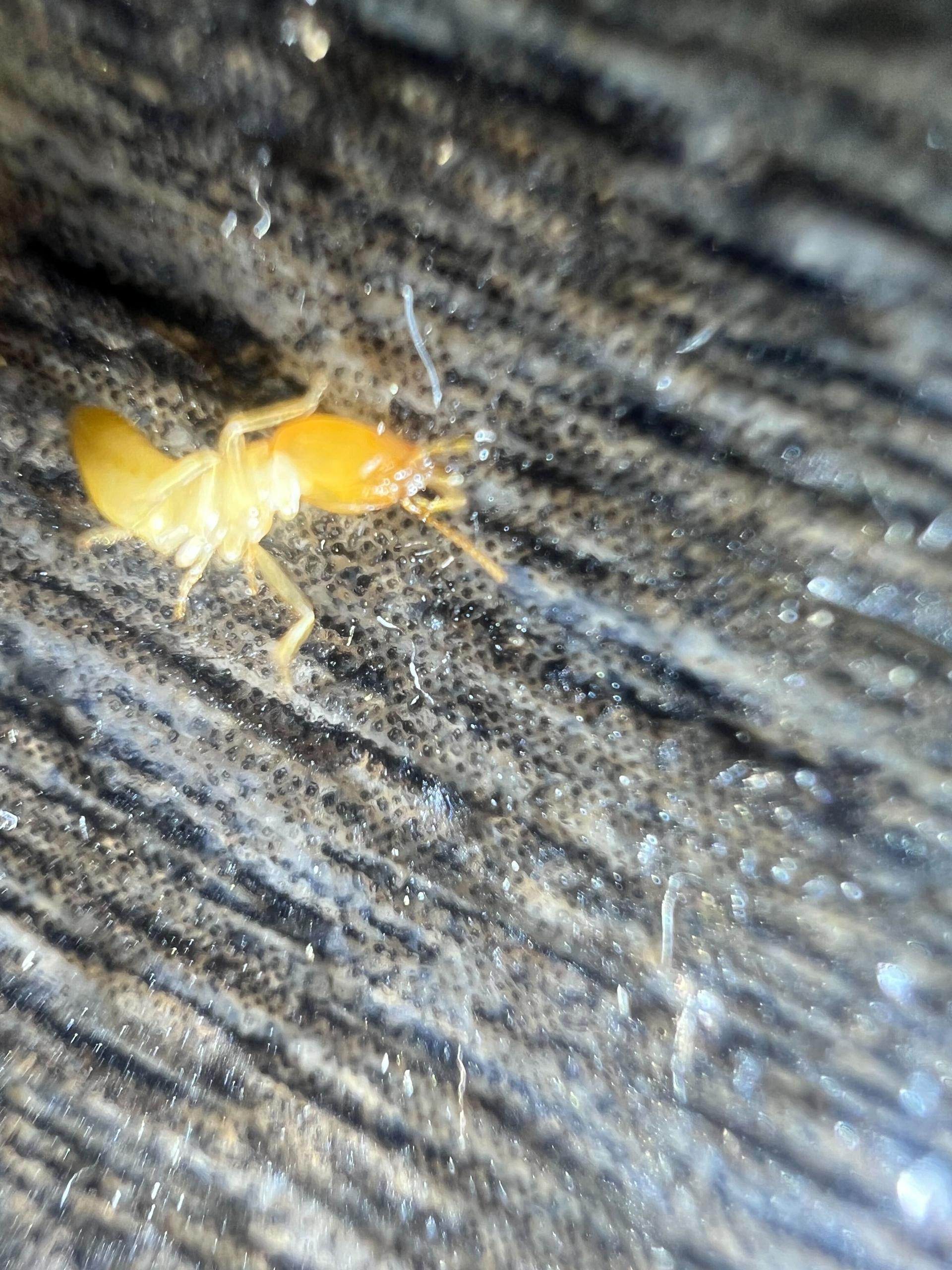
Alabama Professional Services: a subterranean termite worker on a textured surface.
Termite · Since 1977

Termite Inspections: Which Species You Have and Whether It Is Still Active

Old damage and a live colony look much the same to a homeowner. They are very different problems, and the inspection separates them at no charge.

Most people who book a termite inspection have found one thing and want to know how bad it is. That is a fair question, and the inspection that answers it costs nothing.

Alabama

Let's Take the First Step Toward a Healthy Home

A local specialist will inspect your home, walk you through the findings, and send a clear estimate. No cost, no pressure.

BBB Accredited A+
Fully Insured

How the Price Is Set

The inspection is free. Treatment is quoted after it, because the species, the construction and the findings set the scope.

In Depth

What Does the Full Guide Cover?

Read the Full Guide Hide the Full Guide

Most people who book a termite inspection have found one thing and want to know how bad it is. That is a fair question, and the inspection that answers it costs nothing.

Alabama Professional Services inspects with no charge and no obligation. The company has been family-owned since 1977, and its inspectors are licensed by the Alabama Department of Agriculture and Industries' Pesticide Management Division for wood destroying organisms, the work an Official Alabama Wood Infestation Report for a real estate closing covers.

CH 01

What Does a Termite Inspector Look For?

The inspection covers the exterior foundation and soil line, the crawl space or slab edge wherever one is reachable, and the interior places termites show up first: window and door frames, baseboards, and any wood sitting in contact with the ground. Garages, porch columns, deck posts and the wood stacked against the back wall of the house all get a look, because those are the contact points that bring soil and timber together.

Four things are being read.

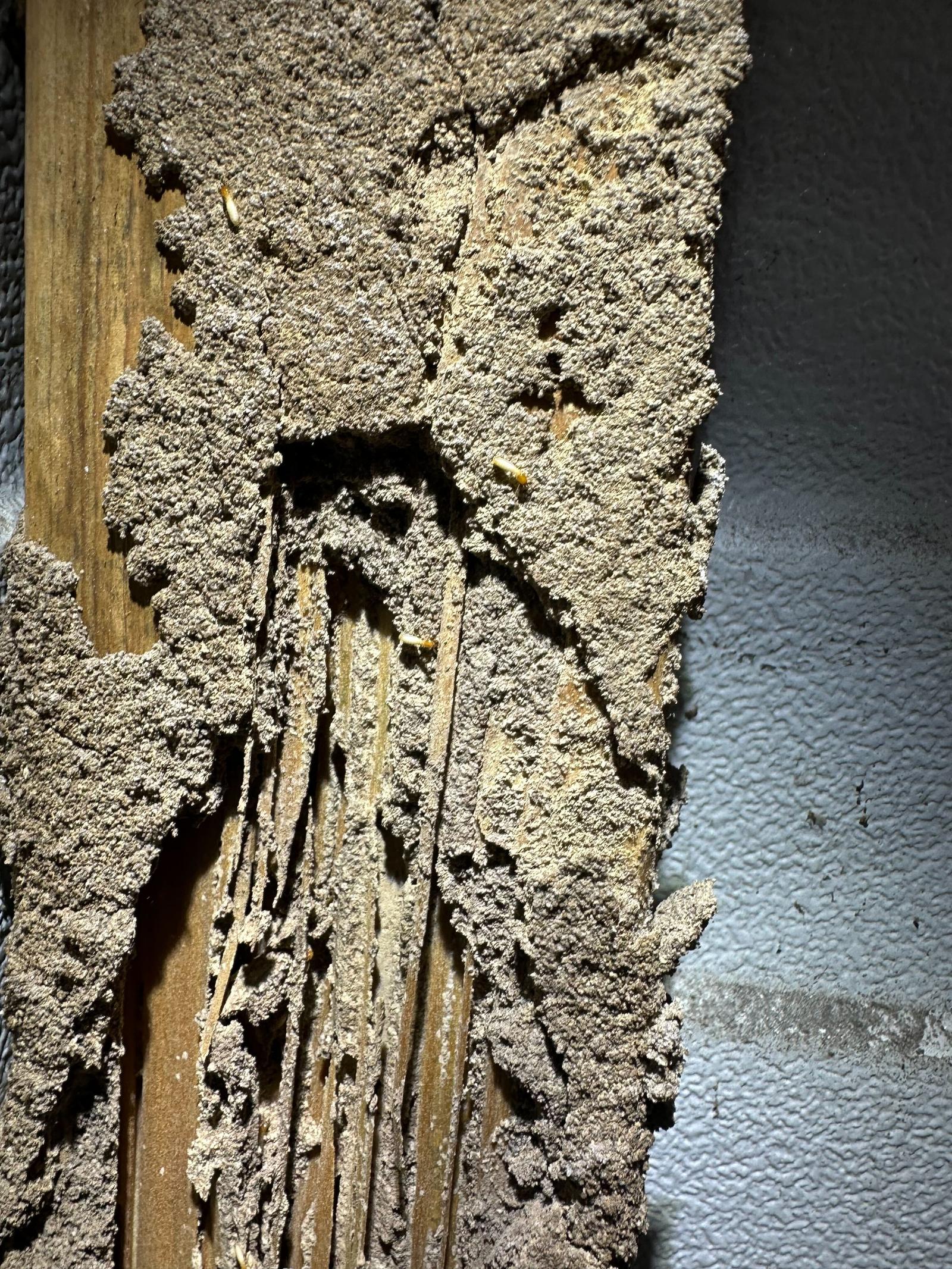
Mud shelter tubes. Subterranean termites live in the soil and dry out quickly in open air, so they build pencil width tubes of soil and saliva to travel between the ground and the wood they are feeding on. The tubes run up foundation walls, up piers, and sometimes down from a joist where a colony has worked around an obstruction.

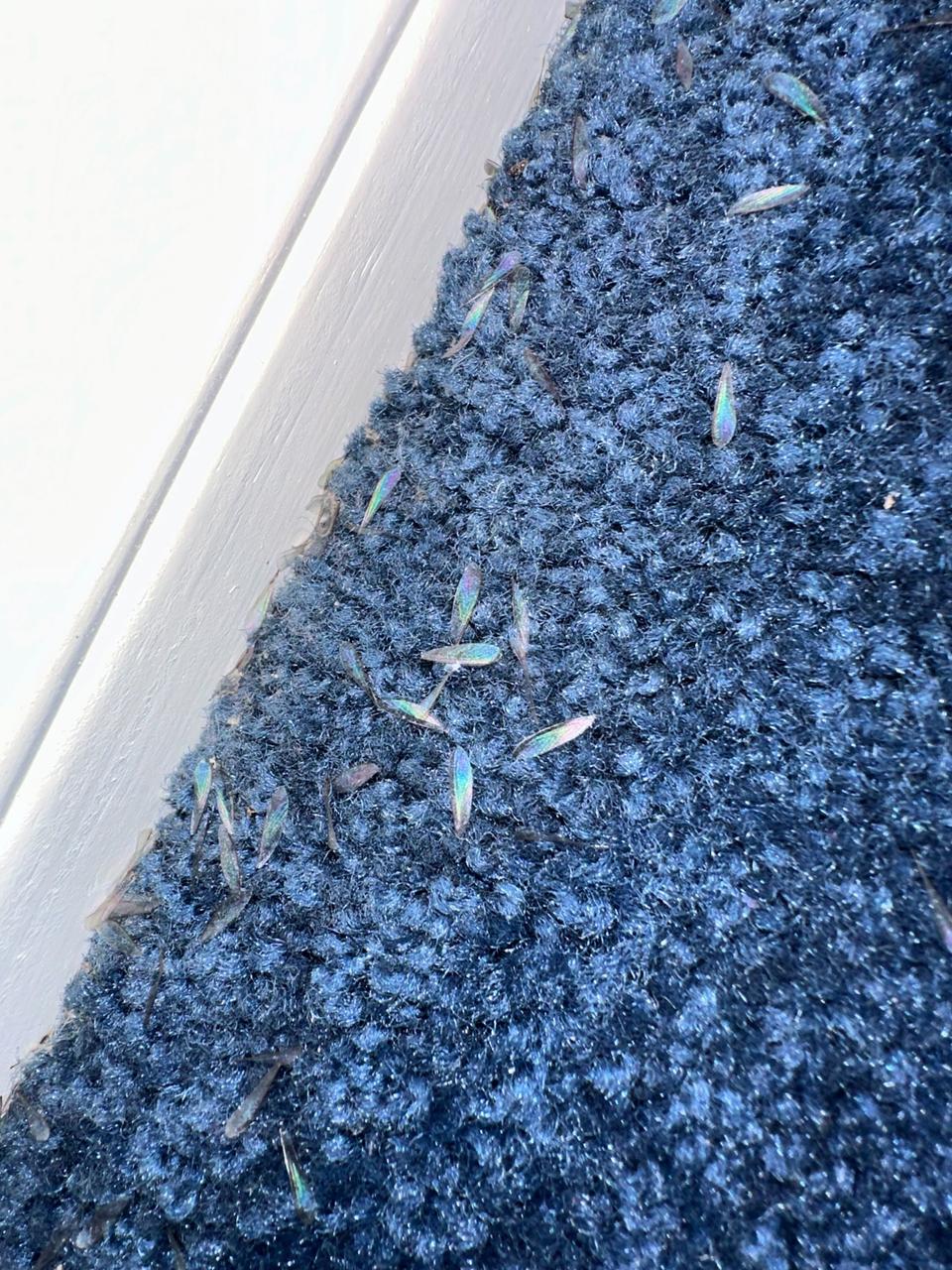
Discarded wings. A mature colony sends out winged reproductives, usually in spring. They fly, land, shed their wings and pair off, which leaves a small drift of identical wings on a window sill or near an interior light. The wings are often the first evidence a homeowner sees, and they usually appear indoors before anyone has spotted a tube outdoors. Timing usually runs south to north: early March on the coast, mid to late March around Birmingham, early April in north Alabama. Formosan termites swarm about a month later, peaking in May, and they swarm at dusk near lights, while subterranean termites swarm in daylight.

Wood that sounds hollow.

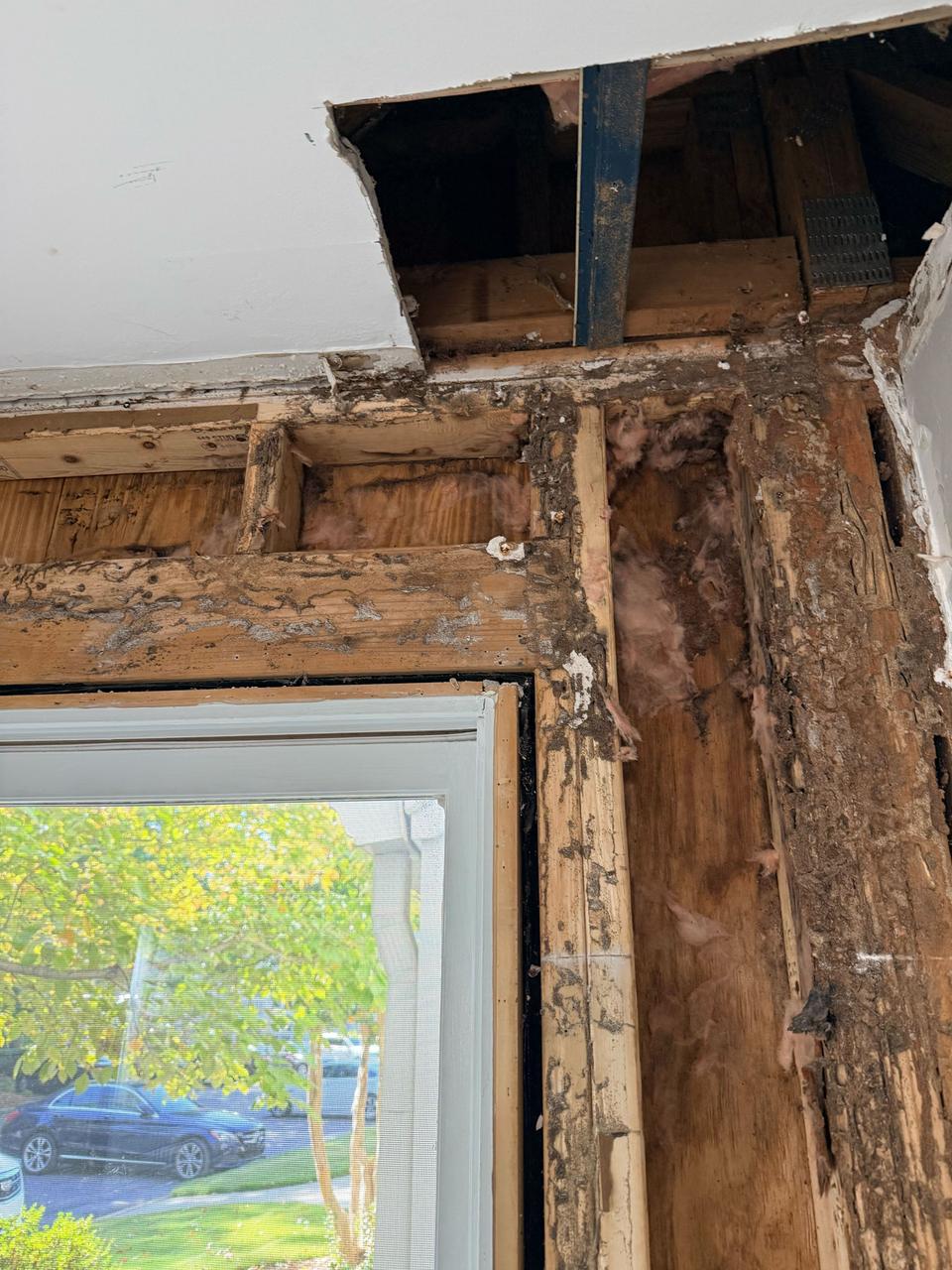
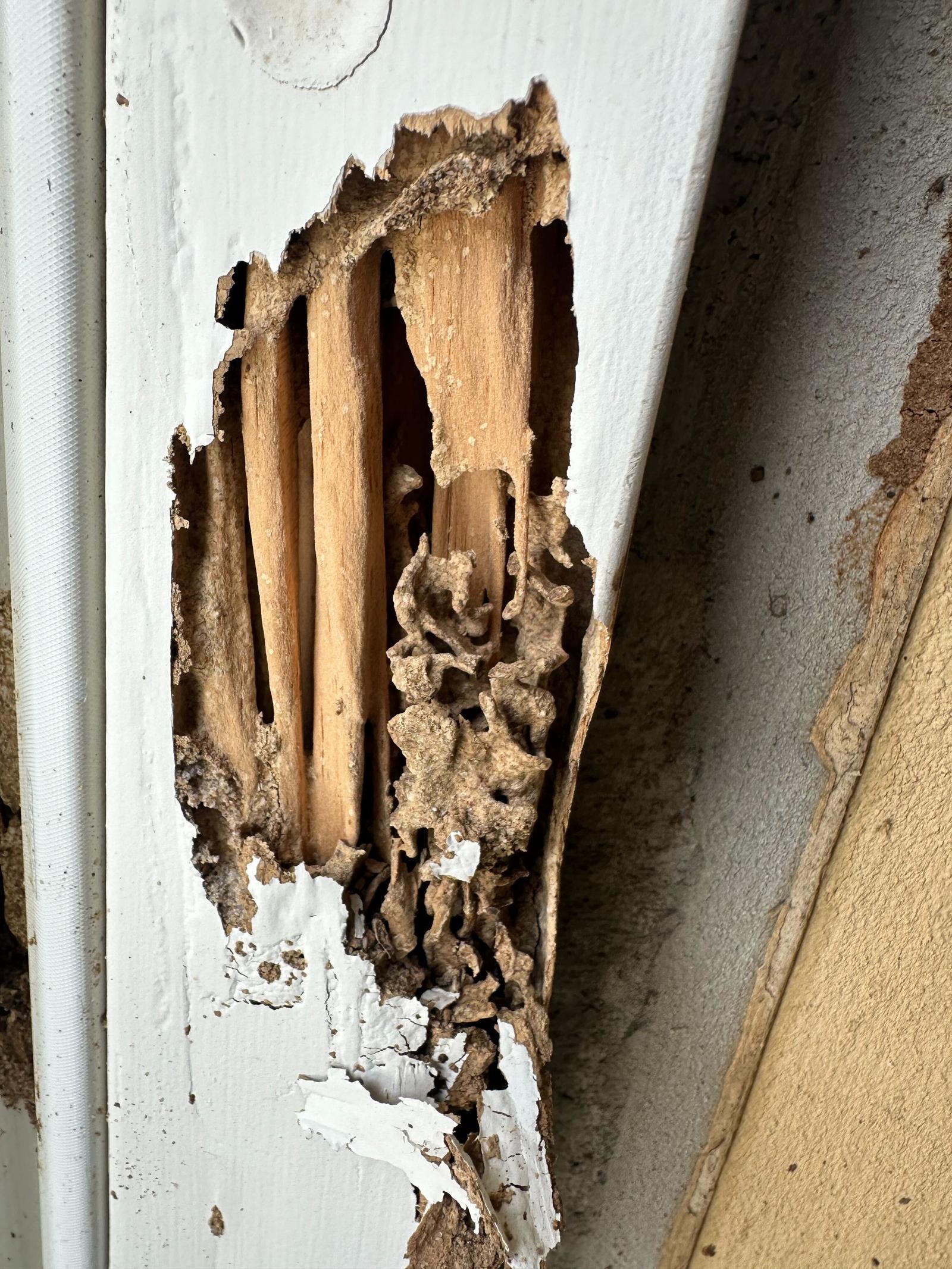
Termites eat along the grain and work from the inside out, leaving the surface layer intact. A baseboard or a joist can be substantially eaten while the paint on it still looks perfect, which is why tapping along a run of trim often tells a technician more than looking at it does.

Frass.

Drywood termites do not build tubes, because they live inside the timber and never touch the soil. What they leave instead is a distinctive six sided pellet that pushes out of small holes and collects in a small pile underneath the infested wood.

CH 02

Why Does the Termite Species Matter More Than the Damage?

Measuring the damage is the part people expect. Naming the species is the part that decides what happens next, and getting it wrong is how a homeowner can end up paying twice.

Subterranean termites are the most common in Alabama. They are reached through the soil, which means either a liquid barrier applied around the structure or in ground bait stations. They are present year round in Alabama. Activity usually slows in the coldest months, but the colony does not die off, so a colony found in October is still there in January.

Formosan termites are a subterranean species but behave differently enough to matter. Colonies are far larger, they can build carton nests above ground inside a wall or a roof void, and they have been spreading inland from the Gulf Coast. A plan sized for ordinary subterranean activity can be undersized against a Formosan colony from the day it is installed.

Drywood termites are the exception to everything above. They never touch the soil. A soil treatment, liquid or bait, does nothing at all for them, and they turn up more often in coastal and southern Alabama. If the evidence is frass with no tubes anywhere, the answer is a different approach entirely.

CH 03

Is It an Active Termite Colony or Old Damage?

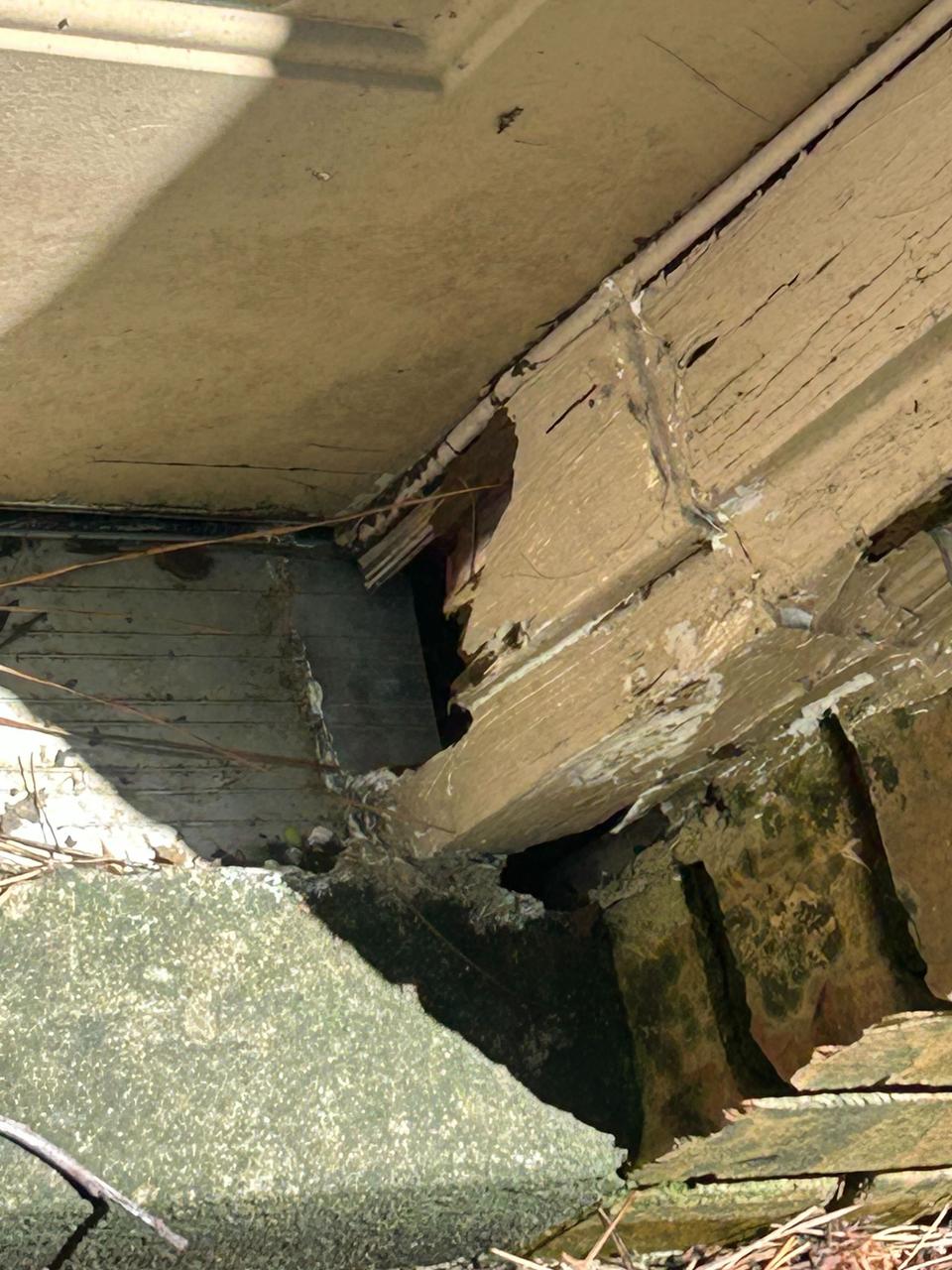
This is the most common reason people call, and the two look much the same from a stepladder. Termite damage stays in the wood long after the colony that made it has gone, so galleries in a joist prove that termites were there at some point, and the colony may or may not still be active. A house treated fifteen years ago can carry visible damage and no live insects at all.

What indicates current activity is different: mud tubes that rebuild after being broken open, live insects in the tube or the timber, fresh frass accumulating under a hole, and damp soil packed into a gallery. A technician breaks a section of tube deliberately and checks it again, because a colony still using that route usually repairs it and an abandoned one does not.

CH 04

What Happens if Termites Are Left Untreated?

Termites are slow and quiet, which is the actual problem. They are not a sudden event, so nothing forces the issue until a floor flexes underfoot or a door frame stops holding its shape. By then the repair has moved from a treatment to carpentry, and the carpentry is usually the larger number.

None of that is a reason to panic about a mud tube on a pier. It is a reason to have it looked at while it is still a treatment decision, before any structural repair is involved.

CH 05

Are They Termites or Flying Ants?

Worth settling before you worry, because ants and termites both swarm at the same time of year and look alike at arm's length. Termites have straight antennae; ants have elbowed ones. Termites have two pairs of wings the same length; an ant's front pair is noticeably larger than the back. Termites have a uniform thick body; an ant has an obvious pinched waist.

CH 06

What Happens After the Termite Inspection?

The technician walks you through what was found, whether it reads as current or historic, where access limited what could be checked, and what the lasting options are for this specific structure. Where treatment makes sense, the recommendation names the product: Termidor SC where a liquid soil barrier fits the property, or Sentricon Always Active where in ground bait stations suit it better.

Bond coverage is available where a structure is put under ongoing protection, renewable annually and transferable when the home is sold.

If nothing is found, that is the answer, and there is still no charge. Schedule your free inspection whenever something has you wondering.

Regional Context

Which Termite Species Live in Alabama?

Alabama has three termite species, and each needs its own approach. Subterranean termites are the most common, live underground and build mud shelter tubes all year. Formosan termites are more aggressive and are spreading inland from the Gulf Coast, and drywood termites, less common and found more in coastal and southern Alabama, leave six sided pellets. Subterranean swarms start on the coast in early March, reach the Birmingham metro by mid to late March and north Alabama by early April; Formosan swarms come about a month later, at dusk near lights.

Problem Signs

What Is Your Home Trying to Tell You?

Each card below is a sign our technicians look for during a free inspection. Open one to read what it can mean and what we do about it.

Spotting One of These in Your Home?

Our specialists evaluate the underlying cause before recommending any work. Inspections are at no cost and there's no obligation to proceed.

Why Choose Alabama Professional Services

What You Get From APS Termite Control

Sentricon Always Active and Termidor SC

We use Sentricon Always Active baiting systems and Termidor SC liquid soil treatment, matched to the termite species and how your home is built.

Termite Bonds That Renew and Transfer

Bond coverage is available, renewable each year and transferable when you sell your home.

Official Alabama Wood Infestation Reports

We issue the Official Alabama Wood Infestation Report required for VA and FHA closings. Each report is valid for 30 days.

Unsure What You're Dealing With?

Not Sure Which Service You Need?

Pick the symptom that best fits. We'll tell you what it can mean and where to go next.

Home Problem Finder
  1. Location
  2. Symptom
  3. History
  4. Your Result

Where Are You Noticing the Problem?

Select the area of your home that best fits.

Frequently Asked Questions

Answers to Common Questions About Termite Inspections

Don't see your question here? Our team is happy to help. Reach out anytime.

Nothing. The inspection is free and carries no obligation, whether termites are found or not. Treatment, if any is needed, is quoted separately after the technician has seen the structure.

Scope

Is This the Right Fix for Your Home?

When Is This Not the Right Fix?

An inspection is not a treatment and it is not a real estate document. If you are closing on a VA or FHA purchase, what the lender needs is an Official Alabama Wood Infestation Report, which covers wood destroying insects generally and is valid for 30 days; ask for that report by name, because a termite inspection is a different service. An inspection also cannot see inside a sealed wall, under a finished slab, or into a crawl space too tight to enter, and a technician will tell you on the day where access limited what could be checked, so a space nobody could reach is never reported as clear.

Service areas

Serving All of Alabama

One office in Irondale. Technicians across the state.

Top cities we serve
  • Huntsville, AL
  • Montgomery, AL
  • Hoover, AL
  • Birmingham, AL
  • Madison, AL
  • Vestavia Hills, AL
  • Alabaster, AL
  • Tuscaloosa, AL
  • Auburn, AL
Check Your Service Area
The Process

How We Approach Termite Inspections

A straightforward path from the first inspection to lasting protection.

Step 01

Exterior and soil line

A walk of the full perimeter reading the foundation, piers, porch columns, deck posts and any wood in contact with the ground, looking for mud shelter tubes and the contact points that bring soil and timber together.

Step 02

Crawl space or slab edge

Where a crawl space is reachable, the technician goes in and reads the joists, sills and piers from underneath. On a slab home the check runs along the slab edge and any penetration through it.

Step 03

Interior check

Window and door frames, baseboards, and the places wings collect. Runs of trim are tapped along their length, because termites leave the surface intact and hollow wood sounds different before it looks different.

Step 04

Species identification

Tubes, frass, wings and live insects each point at a different species. This step decides what treatment would even be appropriate, and it is the step that separates a soil reached subterranean problem from a drywood one.

Step 05

Active or historic

A section of tube is broken open and rechecked. A colony still using that route repairs it; an abandoned one does not. This is what separates old damage from a live infestation.

Step 06

What was found, explained

A walkthrough of the findings, where access limited what could be checked, and what the lasting options are for this structure. Nothing is quoted before the building has been seen.

Customer Reviews
Free inspection

Tell Us What You Found

From the Irondale office to any address in Alabama.

What to expect
  • A local specialist contacts you to schedule a visit.
  • Your specialist inspects the problem and explains the findings.
  • You receive an estimate with no obligation to proceed.
Prefer to call
(205) 951-9717
Alabama

Get a Free Estimate

We'll call to schedule a convenient inspection time.

BBB Accredited A+
Fully Insured

Have Questions About Termite Inspections?

A technician inspects the property, walks you through what we find, and explains the treatment we recommend, with a clear estimate before any work starts. The inspection is free.